
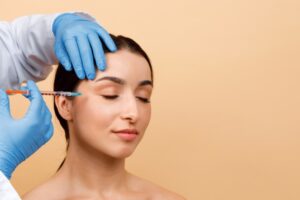
 The eyes are often the first facial feature to show signs of aging. Drooping upper eyelids, under-eye bags, hollowing, fine lines, and wrinkles can all contribute to a tired or aged appearance, even when you feel well-rested and energetic. While blepharoplasty (eyelid surgery) remains one of the most effective ways to rejuvenate the eye area, surgical correction alone may not address every aspect of aging around the eyes.
For this reason, many patients achieve their best results by combining eyelid surgery with non-surgical eye rejuvenation, such as the enhancement provided by dermal fillers and neuromodulators. When thoughtfully planned by a board-certified Wellesley plastic surgeon, these treatments can work together to create a smoother, brighter, and more youthful look in the upper face while maintaining natural-looking results.
Understanding the Benefits and Limitations of Blepharoplasty
Blepharoplasty is designed to smooth the eyelid contours and restore support for weakened tissue. Upper eyelid surgery removes excess skin and fat causing hooding, drooping, or a visual obstruction. Lower eyelid surgery addresses under-eye bags and puffiness by removing or repositioning herniated fat.
While the procedure can be highly effective, eyelid surgery does not directly treat other concerns affecting the eyelids, such as:
- Volume loss under the eyes or in the tear troughs
- Fine wrinkles caused by muscle movement
- Crow’s feet or forehead lines
Fortunately, dermal fillers and injectables offer a minimally invasive solution to address the limitations of upper and lower eyelid surgery.
Treating Under-Eye Hollows with JUVÉDERM® and Restylane®
As we age, the region beneath the eyes loses fat and collagen, creating hollow tear troughs and shadowing that can make the eyes appear sunken or fatigued. Even after lower eyelid surgery, some patients benefit from subtle volume restoration through fat grafting or fillers.
Hyaluronic acid-based fillers, such as JUVÉDERM® and Restylane®, are commonly used to:
- Smooth under-eye hollows
- Reduce the appearance of dark circles caused by shadowing
- Create a more seamless transition between the lower eyelid and cheek
These fillers help the skin retain moisture, allowing the skin to look more hydrated and refreshed. When placed conservatively by an experienced injector, fillers can soften the under-eye area without appearing puffy or overfilled.
Softening Wrinkles with BOTOX® Cosmetic and Dysport®
Wrinkles around the eyes are often caused by repeated muscle movement over time. Crow’s feet, forehead lines, and frown lines between the eyebrows are dynamic wrinkles that develop due to repetitive facial expressions. These creases are not corrected through surgery alone.
Neurotoxins such as BOTOX® Cosmetic and Dysport® can temporarily relax the muscles responsible for these lines, helping to:
- Smooth crow’s feet at the outer corners of the eyes
- Soften forehead creases
- Reduce glabellar lines (the “11s” between the eyebrows)
When combined with blepharoplasty, neuromodulators enhance the overall result by ensuring the surrounding skin looks as youthful as the eyelid contours.
Benefits of Combining Surgical and Non-Surgical Treatments
For some patients, the most successful outcomes come from a customized treatment approach. Each patient’s eye anatomy, skin quality, and rate of aging are unique, which is why combining surgical and non-surgical treatments requires careful planning. Patients who choose a combined approach often enjoy:
- More complete and balanced rejuvenation
- Enhanced surgical results
- Smoother skin texture and fewer wrinkles
- A refreshed look without appearing “overdone”
Rather than relying on a single solution, combining blepharoplasty with injectables can allow for targeted correction of multiple aging concerns around the eyes. In many cases, it’s best to wait until swelling has fully resolved after blepharoplasty before adding filler, allowing for precise placement and optimal symmetry.
Not every patient needs both surgical and non-surgical services, but many benefit from the dual enhancement that a more comprehensive treatment plan can provide. A consultation with board-certified plastic surgeon Geoffrey Leber, MD, FACS is the best way to determine the ideal combination for your goals. Contact Dr. Leber today to learn more about our facial rejuvenation procedures or to book a consultation.